
Homeowners are often told that termite damage is not covered by homeowners insurance. When an insurance company denies a claim based on termites, insects, deterioration, or maintenance, many homeowners assume there is nothing more they can do.
That may not always be the case. A termite-related denial can sometimes be challenged, particularly when hidden termite damage causes a sudden failure, downward movement, or collapse of part of a home and the homeowner had no knowledge of the ongoing infestation or damage.
If your insurance company denied a claim involving hidden termite damage, a ceiling that dropped or deflected downward, or another possible collapse, contact our office before assuming the denial is final.
Schatzman & Hovanyecz, P.A. has successfully challenged termite-related insurance denials. Every claim is different, and whether a denial can be overcome depends on the particular facts, the available evidence, and the homeowner’s insurance policy.
Why Are Termite Claims Often Denied?
Insurance companies frequently deny termite claims by characterizing the damage as the result of an ongoing infestation, deterioration, or a maintenance problem. A denial letter may state that termites were present for a long time or that the homeowner should have discovered and addressed the condition earlier.
But termites can damage areas that are completely concealed from the homeowner. They may be above a ceiling, behind a wall, beneath flooring, or inside structural wood. A homeowner may have no visible warning that serious damage is developing.
If your insurer has denied a claim on the ground that the termite activity must have been ongoing or should have been known, we can review the denial and the circumstances surrounding the loss.
Hidden Termite Damage and a Possible Collapse
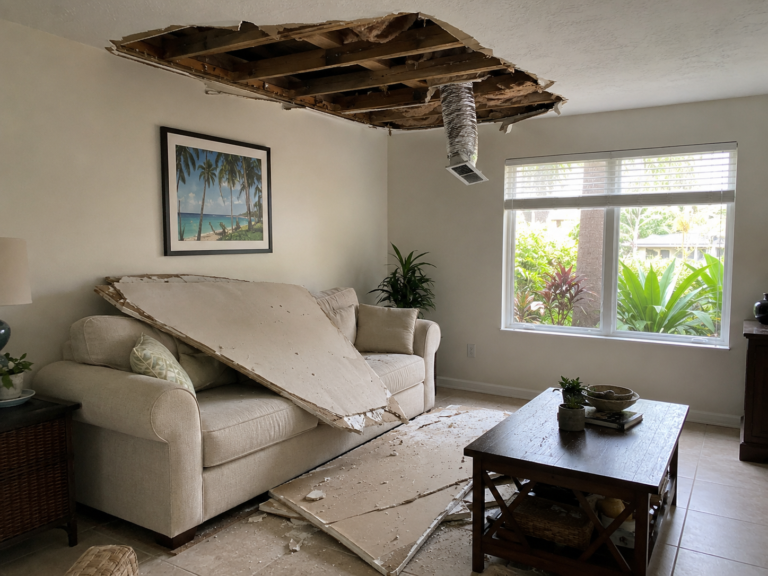
A claim may require closer examination when termite damage remains hidden until part of the home suddenly fails, drops, deflects downward, or caves in. A common example is a ceiling that suddenly moves downward or partially gives way and exposes termite damage in the concealed wood above it.
A collapse does not necessarily mean that an entire ceiling, roof, or building must fall completely to the floor or ground. Depending on the event and the policy, a sudden downward deflection or partial caving in of building materials may warrant evaluation as a possible collapse even though the structure remains standing.
Homeowners should not try to decide from the appearance of the damage alone whether an event technically qualifies as a collapse. If a ceiling, roof component, floor, or other part of the home suddenly moved downward or lost support, contact our office so we can evaluate the event and the applicable policy.
It may also matter whether the homeowner knew about the infestation or damage before the event. A homeowner who had no visible signs and no knowledge of the concealed condition may be in a different position from someone who was aware of active termite damage and allowed it to continue.
A Ceiling Does Not Have to Fall Completely
Many termite-related claims involve a ceiling because termite damage can remain concealed in the wood above the living space. Sometimes drywall falls to the floor. In other situations, the ceiling or supporting materials may suddenly drop, sag substantially, or deflect downward without completely detaching.
Do not assume there is no potential claim simply because the ceiling did not fall all the way down. The nature and extent of the movement, whether it occurred suddenly, the condition of the concealed materials, and the wording of the policy should be reviewed before deciding whether the event may qualify as a collapse.
Our firm can examine what occurred, what the homeowner knew before the loss, why the insurer denied the claim, and whether there is a basis to challenge the decision.
What Should You Do After a Sudden Termite-Related Failure?
If a ceiling or another part of the home suddenly falls, caves in, or moves downward, photograph and record the condition before cleanup or repairs when reasonably possible. Keep fallen materials and damaged wood when possible, and save inspection reports, termite records, correspondence, and photographs provided by the insurance company.
You should also keep the complete denial letter and request a copy of the insurance policy that was in effect when the event occurred. These materials can help us evaluate the claim.
Avoid assuming that the presence of termites automatically ends the insurance inquiry. The nature of the event, whether the damage was hidden, what the homeowner knew, and the insurer’s stated reasons for denial may all be important.
Has Your Termite or Collapse Claim Been Denied?
An insurance company’s denial is not necessarily the final answer. We have successfully challenged termite-related denials, but each claim must be evaluated individually.
If your homeowners insurance company denied a claim involving hidden termite damage, a ceiling that fell or moved downward, or another possible structural collapse, contact Schatzman & Hovanyecz, P.A. We can determine whether the event may qualify as a collapse and whether there may be a basis to challenge the denial.