
A leaking pipe, failed appliance, or other water leak may seem like a relatively minor problem when it is first discovered. But the water can cause much more damage than the plumbing problem itself.
Water can get under flooring, behind walls, under and behind cabinets, and into other parts of the home. Depending on how the loss happened and the terms of your homeowners insurance policy, the resulting damage may be covered by insurance.
If you have a water damage claim involving hidden plumbing leaks, damaged cabinets or flooring, mold, or an insurance company that denied or underpaid the claim, contact Schatzman & Hovanyecz, P.A. so we can review the loss and the applicable policy.
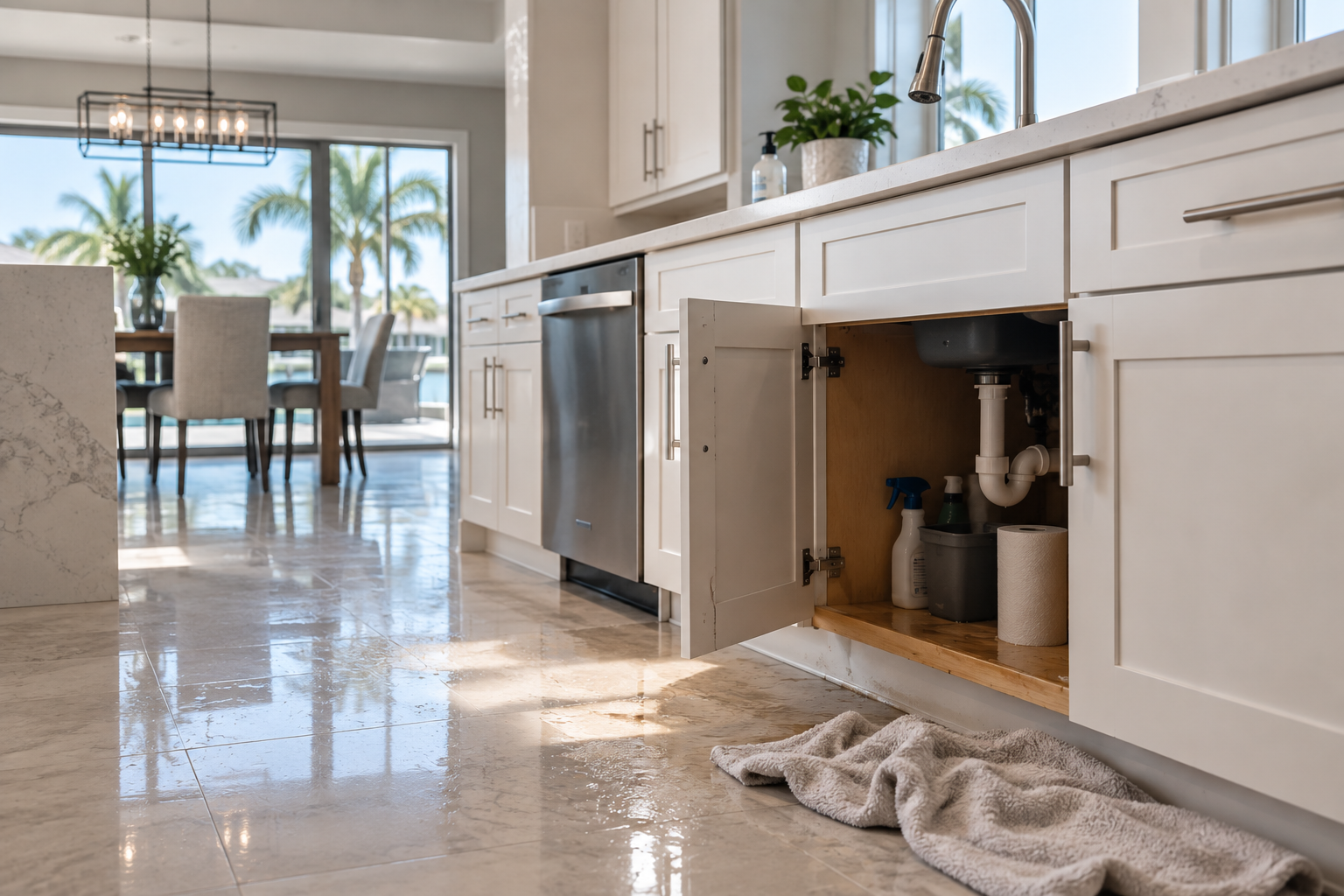
Common Water Damage Claims
Common water losses include leaking or broken pipes, failed plumbing supply lines, refrigerators and ice makers, washing machines, dishwashers, water heaters, toilets, showers, air-conditioning systems, drain lines, and roof-related water intrusion.
A failed supply line, for example, may be inexpensive to replace, but the leak may damage cabinets, flooring, drywall and other parts of the home. Getting to the broken plumbing can also require removing drywall, tile, flooring, cabinets, or even part of a concrete slab. Depending on the policy and cause of the loss, the cost of accessing the broken plumbing and repairing the resulting damage may be covered even when the cost of replacing the failed plumbing itself is treated differently.
Older homes can also experience water losses involving broken or deteriorated drain lines, backups and overflows.
Hidden or Unknown Plumbing Leaks and Mold
Not all plumbing leaks are immediately visible. A pipe can leak inside a wall, under flooring, or behind cabinets for some time before the homeowner has any reason to know there is a problem.
Different insurance policies treat hidden or ongoing leaks differently, so the specific policy language and when the leak could reasonably have been discovered can be important.
Moisture may also remain behind walls, under flooring, or behind cabinets even after visible water has been cleaned up, and that moisture can lead to mold.
Although homeowners sometimes refer to a separate “mold claim,” the important question is usually what caused the water or moisture that led to the mold. Mold found behind cabinets or walls after a covered water leak may be part of the overall loss, although homeowners policies often contain separate provisions and limits for mold-related damage and remediation.
Condominium owners can face an additional problem when the water comes from another unit or from another part of the condominium building.
What Should You Do After Discovering Water Damage?
Take reasonable steps to stop the leak and prevent further damage, but also document what happened before the evidence disappears.
Take photographs and videos of the water, the source of the leak if it is visible, and the areas that appear damaged. If a plumber identifies what failed, ask the plumber to document it and preserve the damaged plumbing part when possible.
Do not assume that cleaning up the visible water means all of the damage has been found.
Damage to Cabinets and Flooring
Cabinets and flooring are often some of the most expensive parts of a water damage claim.
Water can get underneath and behind kitchen or bathroom cabinets, damaging the bottom, back, shelving and other parts of the cabinets that may not be visible from the outside. Moisture trapped behind or underneath cabinets can also lead to mold.
Replacing damaged cabinets may affect countertops, backsplashes and other cabinets that were installed together.
Flooring can create similar problems. Water can travel underneath wood, laminate, vinyl or tile flooring and spread beyond the area where the leak was first found. The damage may therefore be larger than what is visible during the first inspection.
What If You Cannot Stay in the Home?
Some water losses make it difficult or impossible to remain in the home while remediation and repairs are being completed.
Mold remediation may require part of the home to be sealed off, plumbing work may temporarily leave the home without running water, or major repairs to a kitchen, bathroom or flooring may make normal use of the home difficult.
Many homeowners policies include Additional Living Expense, or ALE, coverage when a covered loss makes the home unfit to live in. Depending on the policy and circumstances, ALE may help with the increased cost of temporarily living somewhere else while repairs are completed.
When the Insurance Company Does Not Pay Enough or Denies the Claim
Even when an insurance company accepts a water damage claim, there may be disagreement about what was damaged and what it will cost to properly repair the home.
That can be especially important when the claim involves cabinets, flooring, the cost of accessing broken plumbing, mold remediation, or damage that was not visible during the initial inspection.
Insurance companies also deny water damage claims for a variety of reasons, including disputes over what caused the loss, how long the leak existed, whether an exclusion applies, or whether the policyholder complied with policy requirements.
A denial does not necessarily mean the insurance company’s decision is correct. Water damage claims often turn on the specific facts of the loss and the language of the policy.
At Schatzman & Hovanyecz, P.A., we represent Florida homeowners and condominium owners in disputes involving plumbing leaks, water damage and resulting damage to their property. If your insurance company has denied your claim, failed to fully pay it, or you simply have questions about your water loss, contact Schatzman & Hovanyecz, P.A. to discuss your claim.